| |
|
This
web site is a resource for researchers of family tree
(genealogy)
and history in Merrimack County, New Hampshire.
HISTORY | DOCUMENTS
| OTHER AREAS OF RESEARCH
MAP OF MERRIMACK COUNTY | TOWNS/CITIES
IN MERRIMACK COUNTY
For
Help with Researching your family tree,
see HISTORY & GENEALOGY OF NH (Main Site)
- Merrimack
County Web site
(official with all departments)
- Merrimack
County Registry of Deeds
[Note: this link is for researching property/land
deeds in Merrimack Co NH]
163
N. Main Street, P.O. Box 248
Concord, N.H. 03302-0248
Tel: 603-228-0101
Open Monday-Friday, except for holidays, from
8 AM - 4 PM.
All recorded documents are in one master index.
Records indexed on a public use terminal back
to 1920. Online documents can be found at the
link above.
- Merrimack
County Register Probate
[wills]
163 N. Main Street - Concord, NH 03302
Telephone: (603) 224-9589
-
New Hampshire, County Probate Records, 1660-1973
[wills]
Merrimack County, New Hampshire [from Familysearch.org]
- Merrimack
County Superior Court [divorce, lawsuits]
163 North Main Street
P.O. Box 2880
Concord, NH 03302-2880
DOCUMENTS
(this site) for genealogical research -
unique to this web site!
These documents often refer to resident living
on numbered roads (i.e., road #1, #25, etc). These
roads can be viewed on the 1885 cheshire county map
seen below.
SEE "History
of Merrimack and Belknap counties, New Hampshire
- Hurd, Duane Hamilton at Internet Archive (searchable
book) for more details on each of the towns below.
- History
& Genealogy: Allenstown, N.H. - TXT File (this
site)
- History
& Genealogy: Andover N.H.-
TXT file
(this site)
- History
& Genealogy: Boscawen, N.H.
- TXT file (this
site)
- Births
Recorded From 1733-1850 Boscawen NH - TXT
file (this site)
- Narratives
of Those Who Were Taken Captive or Killed By the Indians,
Boscawen NH - TXT file (this
site)
- Biographies
of Contoocook & Boscawen NH people - TXT file
(this site)
- History
& Genealogy: Bow, N.H. -TXT (this
site)
- History
& Genealogy: Bradford, N.H. - TXT -- (this
site)
- History
& Genealogy: Canterbury, N.H. -- TXT
file (this site)
- History
& Genealogy: Chichester, N.H.
- TXT file (this
site)
- History
& Genealogy: Hill, N.H. - TXT File (this
site)
- Marriages
- performed in Loudon NH by Rev. Jedediah Tucker 1790-1815
- TXT file (this site)
- Tax
List 1774 of Loudon NH - TXT file (this site)
- History
& Genealogy: Wilmot, N.H. --TXT file --
See
history of New London NH for earliest history. This
history includes incorporation of the town, early
description, first town officers, Kearsage Mountain,
and some participants in the Civil War, 1810 U.S.
Census of Kearsarge Gore and New London NH.
- Town
histories of all towns/cities in Merrimack County
are coming soon)
OTHER
AREAS OF RESEARCH FOR MERRIMACK COUNTY, NH
- GENEALOGY
AND HISTORY
- SEE
Researching family
trees in New Hampshire and Merrimack County
- Vital
Records, Biographies and More in Merrimack County
NH - USGenWeb (please see this page!)
- Origin
of the Towns in Merrimack County New Hampshire
- Granite State Monthly 1898
- Online
Book: The
Merrimack River directory (Volume yr.1872-1873)
- Greenough, W.A. & Co., Boston"Complete
business directory of Franklin, Concord, Suncook,
Hooksett, Manchester, Nashua, Lowell, Lawrence,
Haverhill, Merrimack, Amesbury and Salisbury,
and Newburyport."
- Online
Book: Online Book: History
of Merrimack and Belknap counties, New Hampshire,
1889 - Hurd, Duane Hamilton at Internet Archive
(searchable)
- Online
Book (Women):
Diary of Sarah Connell Ayer. Andover and Newburyport,
Massachusetts; Concord and Bow, New Hampshire;
Portland and Eastport, Maine - Ayer, Sarah Newman
Connell, 1910
- Photographs:
- NATIVE
PEOPLES:
- MAPS
- Locate
a historical society in New Hampshire
- Historical
Society of Merrimack County
- SEE
Merrimack County
genealogical resources
- SEE
Merrimack County
reference ( more maps, statistics, demographics
|
|
|
|
|
|
|
|
|
|
|
|
|
| |
|
|
| |
|
|
|
|
|
|
|
|
|
|
|
|
|
|
|
|
|
|
|
|
|
|
|
|
|
|
| |
|
|
|
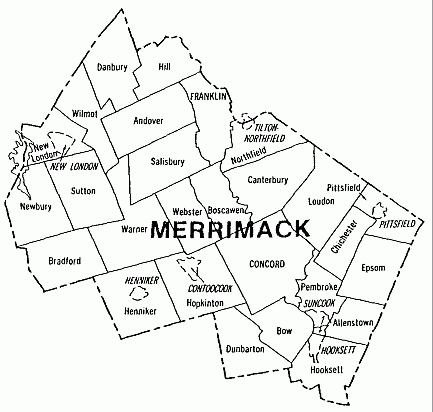
If you are looking for town/city specific resources,
click the blue hyperlink or the map of the town name you want.
For other resources
within Cheshire County
If you want to know about general genealogy resources (such
as how to find vital records, deeds and other documents),
visit the "Genealogical Research"
section.
|
|
|
|
Current communities in Merrimack County include:
Allenstown,
Andover, Boscawen,
Bow, Bradford,
Canterbury, Chichester,
Concord, Danbury,
Dunbarton, Epsom,
Franklin, Henniker,
Hill, Hooksett,
Hopkinton, Loudon,
New London, Newbury,
Northfield, Pembroke,
Pittsfield, Salisbury,
Sutton, Warner,
Webster, Wilmot
|
|
|
|
|
|
|
|
|
|
|
|
|
|
TOWNS
/ CITIES IN MERRIMACK COUNTY, New Hampshire
ALLENSTOWN:
town
Zip Code:
Phone Area Code:
Region(s):
Latitude
Longitude
- Brief
History of Allenstown NH: Incorporated in 1831. First
granted in 1721, the town was named after Samuel Allen,
the governor of the province in the late 1600s. A portion
of Bow was annexed in 1815, and a portion of Hooksett in
1853. This town is the home of Bear Brook State Park (the
area was once known as excellent bear and wild duck hunting
ground).
- Villages
and Place Names: Suncook, Blodgett
- GOVERNMENT
& RESEARCH:
- MUSEUMS
& ATTRACTIONS:
- HISTORY
& GENEALOGY:
- History
& Genealogy: Allenstown, N.H. - TXT File (this
site) Includes geographical description,
names of some original grantees, text of some early
documents including names of the signers ; Biographic
Sketches of Major Sterling Sargent and Rev. Henry Hartwell.
Original Source, History of Merrimack and Belknap
Counties, New Hampshire; Philadelphia: J.W. Lewis &
Co., 1885
- Online
Book: History
of Allenstown NH, (section) from History of
Merrimack and Belknap counties, New Hampshire, 1889
- Hurd, Duane Hamilton at Internet Archive (searchable)
- Online
Book: Annual
Reports of the selectmen, treasurer and superintending
school committee, of the town of Allenstown, VARIOUS
years between 1877 and 2006; most include vital records,
births, marriages and deaths.
- Timeline
of Allenstown History
(Google)
- Cemetery
Inscriptions, (all)
Dowst Cemetery, Allenstown NH - Epsom Settlers web
site
- PHOTOGRAPHS:
- MAPS:
ANDOVER
- Brief
History of Andover, New Hampshire: Andover
New Hampshire was incorporated in 1779. According to the
"Topographical and Historical Sketch of the Town of
Andover" published in 1822 by Jacob B. Moore, Andover
was originally called New Breton "in honor of those
brave men who achieved the capture of Cape Breton in 1745."
Most of the original grantees were out of this expedition.
The regimental surgeon, Dr. Anthony Emery, was a college
friend of John Phillips, founder of the Phillips Andover
Academy in Massachuetts, which was completed in 1779. The
town was incorporated as Andover in that same year. Andover,
New Hampshire's first private school, as referenced in John
R. Eastman's "History of Andover, NH 1751-1906,"
was started in 1822 and closed in 1828; another was started
in 1848 and became Proctor Academy. East Andover Village
was the original center of the town of Andover prior to
the partitioning off, in 1828, of a portion on the east
side of the village to form part of Franklin.
- Villages
and Place Names: New
Breton, Cilleyville, East Andover, Potter Place, West Andover,
Halcyon Station
- GOVERNMENT
& RESEARCH
- MUSEUMS
& PLACES OF INTEREST:
- Andover
Historical Society
P.O. Box 167
Andover, NH 03216
603-735-5694
Email: gupton@tds.net
- Andover
Historical Society Museum
Routes 4 and 11
Potter Place, NH
Phone: 603-735-5694
This museum is set in a Victorian era railroad station,
complete with a caboose, railroad artifacts, a log boat,
and an authentic station master's office. Open May - October.
Free admission.
- HISTORY
& GENEALOGY:
- History
& Genealogy: Andover N.H.-
TXT file (this site)
- Online
Books:
Reports by the selectmen of the town of Andover, New
Hampshire, for VARIED years between 1861-2007; including
vital records, births, marriage and deaths.
- Online
Book: History of the town of Andover, New Hampshire,
1751-1906 - Eastman, John R. (John Robie) IN TWO PARTS:
Part
1: Narrative | Part
2: Genealogies
- Online
Book: History
of Andover NH, (section) from History of Merrimack
and Belknap counties, New Hampshire, 1889 - Hurd, Duane
Hamilton at Internet Archive (searchable)
- Online
Book: Civil
and religious history of Andover Center, N.H. -
Clark, Lyman, 1901
- Online
Book: A
topographical and historical sketch of the town of Andover,
in the county of Hillsborough, and state of New Hampshire
- Moore, Jacob Bailey, 1822
-
Sunny
Slopes, lost ski area of Andover NH
-
Cemetery
Inscriptions, Old
Cemetery at the Center, Andover NH - Ray's Place
-
Cemetery
Inscriptions, 8 Cemeteries, Cilley Cemetery on
Morrey Hill, Cilley Hill Cemetery, Dudley Family Cemetery,
Durgin Cemetery, Flaghole Cemetery, Marston Knoll
Cemetery, Sawyer Cemetery and Simonds Cemetery - Ray's
Place
- PHOTOGRAPHS:
- MAPS:
BOSCAWEN
- Brief
History of Boscawen NH: Originally called Contoocook,
Boscawen was incorporated in 1760. The town was named for
an English
admiral, Edward Boscawen, who fought under General Amherst
in the conquest of Canada. One of the first log forts was
located here. The Contoocook Fort on the Merrimack, built
in 1739, was used for protection against the Indians. Boscawen
includes the village of Gerrish, and is home to the State
Veterans Cemetery.
- Villages
and Place Names: Boscawen,
Penacook (also see Concord), Gerrish, Contoocook
- GOVERNMENT
& RESEARCH
- HISTORY
& GENEALOGY
- History
& Genealogy: Boscawen, N.H.
- TXT file (this site)
- Database
of births, marriages and deaths,
from the town reports, Boscawen Historical Society
- Resources
at Boscawen Historical Society
- Online
Books: Reports
by the selectmen of the town of Boscawen, New Hampshire,
for VARIED years between 1857-2007; including vital
records, births, marriage and deaths.
- Births
Recorded in the Town Records of Boscawen NH from 1733
to 1850
[from One hundredth and fitieth anniversary of the settlement
of Boscawen and Webster]
- Online
Book:The
history of Boscawen and Webster [N.H.] from 1733 to
1878 - Coffin, Charles Carleton, 1878
- Online
Book: History
Boscawen-Webster : fifty years 1883-1933 - Buxton,
Willis G., comp, 1933
- Online
Book: One
hundred and fiftieth anniversary of the settlement of
Boscawen and Webster, Merrimack Co., N.H., August
16, 1883. Also births recorded on the town records from
1733 to 1850 - Boscawen (N.H.), 1884
- Online
Book: A
chronological register of Boscawen, in the county of
Merrimack, and state of New-Hampshire, from the
first settlement of the town to 1820. In three parts:
descriptive, historical & miscellaneous - Price,
Ebenezer, 1823
- Online
Book: History
of Boswawen NH, (section) from History of Merrimack
and Belknap counties, New Hampshire, 1889 - Hurd, Duane
Hamilton at Internet Archive (searchable)
- Biography
and Likeness: Charles
Hubbard Amsden
- Biography:
Samuel
Colcord Bartlett
- Biography:
Charles
Carleton Coffin
- Biography
and Likeness: Enoch
Gerrish
- Biography
and Likeness: Ezra
Sheldon Harris
- Biography:
John
Kimball
- Biography
and Likness: Benjamin
Ames Kimball
- Biography
and Likeness: William
Smith Kimball
- Online
Books: The
John Elliot family of Boscawen, New Hampshire -
Kimball, Henry Ames, 1918
- Online
Book: Commemorative
Discourse, Delivered at Boscawen, N.H., on the Occasion
of the Fiftieth Anniversary... - Nathaniel Bouton,
1859
-
Biography
& Photograph of General John Adams Dix
- Biography:
Moody Currier, born Boscawen NH
- General
John Adams Dix (1798 - 1879), born Boscawen NH,
Governor of New York State 1873 - 1874 | 2nd
likeness
- Biography:
Boscawen New Hampshire Inventor, Prof.
Moses Gerrish Farmer (1820-1893) - Blog: Cow Hampshire
- Boscawen
New Hampshire Author, Lecturer, Activist for Peace and
Social Reform: Lucia
True Ames Mead (1856-1898)
- from blog, Cow Hampshire
- Genealogy:Gerrish
Family of Boscawen NH (personal web site and photographs
- archived version)
- Genealogy:
Elliott
Family of Boscawen NH (personal web site)
- Tombstone
Inscriptions (some) - New
Hampshire State Veterans Cemetery
Boscawen's
MAPLEWOOD Cemetery - Find-A-Grave
- Boscawen's
PINE GROVE Cemetery
- Find-A-Grave
- Births
Recorded From 1733-1850 Boscawen NH - TXT file
(this site)
- Tombstone
Inscriptions, Call
Cemetery, Boscawen NH - USGenWeb
- Narratives
of Those Who Were Taken Captive or Killed By the Indians,
Boscawen NH - TXT file (this
site)
includes narratives of Hannah Duston, Josiah Bishop,
Thomas Cook and Caesar, Elisha Jones, Putney, Nathaniel
Meloon and family, Call family, Ezekiel Flanders, Edward
Emery, Moses Jackman, and John Flanders. Source: A Chronological
Register of Boscawen, In the County of Merrimack, and
State of New-Hampshire, From the First Settlement of
the Town to 1820" by Ebenezer Price, A.M.; Pastor
of the Second Church in Said Town. Printed by Jacob
B. Moore, Concord (1823)
- Biographies
of Contoocook & Boscawen NH people - TXT file
(this site) including
John Aldrich, Sinkler Bean, Josiah Bishop, John Bowen,
Andrew Bohonnon, Capt. Abraham Burbank, Capt. Moses
Burbank, Philip Call, Martha Gerrish-Clough, Charles
Carleton Coffin, Thomas Cook, Rev. Enoch Corser, John
Corser, William Dagadon, William Danforth, Nathaniel
Danforth, Joseph Easman/Eastman, John Eliot Jr., Olive
Eliot, Edward Emery, Edward Fitzgerald, Jacob Flanders,
John Fowler, Stephen Gerrish, Mrs. Joanna Hale-Gerrish,
George Jackman, Richard Jackman, Joel Manuel, Nathaniel
Meloon, William Peters, Nathaniel Rix, Daniel Rolf and
Deacon Peter Stone.
- PHOTOGRAPHS:
- MAPS:
BOW
- Brief
History of Bow New Hampshire: Bow was incorporated in
1727. There is also a bend in the Merrimack River within
its borders, and the name Bow may have come from that source.
Bow is the birthplace of Mary Baker Eddy, founder of the
First Church of Christ, Scientist and leader of the Christian
Science movement. Sergeant
John Ordway, a native of Bow was an influential member of
the Lewis and Clark expedition.
- Villages
and Place Names: Suncook,
Bow Bog, Bow Center, Bow Junction, Bow Mills, South Bow
- GOVERNMENT
& RESEARCH:
- HISTORY
& GENEALOGY:
- History
& Genealogy: Bow, N.H. -TXT (this
site)
- Online
Book: History
of Bow NH, (section) from History of Merrimack
and Belknap counties, New Hampshire, 1889 - Hurd, Duane
Hamilton at Internet Archive (searchable)
- Online
Books: Annual
Report of the Town of Bow, New Hampshire for
VARIOUS YEARS between 1876 - 2007 including vital records,
births, marriages and deaths.
- Brief
History of Bow NH - from official town web site
- Online
Book: Diary
of Sarah Connell Ayer [some events in Bow NH] -
Internet Archive
- Biography
and Likeness: Mary Baker Eddy
- Partial
Cemetery Listing,
Alexander Cemetary River Road, Bow, NH - Find-A-Grave
- Article:
The
Colby and Phelps Families of Bow and Northfield, New
Hampshire - blog:Cow Hampshire
- PHOTOGRAPHS:
- MAPS:
BRADFORD
- Brief
History of Bradford, New Hampshire: The
town was first granted in 1771, the town was named New Bradford,
then Bradfordton, and finally was incorporated as Bradford
in 1787, the year of the constitutional convention. New
Hampshire's delegation was not going to approve the constitution,
but under the leadership of Bradford’s Thomas Stickney
the delegation approved ratification, and, being the ninth
state to do so, gave the United States its constitution.
Bradford includes the villages of Bradford Center and Melvin
Mills, and Lake Massasecum.
- Villages
and Place Names: New
Bradford, Bradfordton, Box Corner, Bradford Center, Melvin
Mills, Lake Massasecum
- GOVERNMENT
& RESEARCH:
- Brown
Memorial Library
72 W Main St
Bradford, NH 03221
(603) 938-5562
- Bradford
Historical Society
603–938–5386
Contact: Millie Kittredge
- HISTORY
& GENEALOGY:
- History
& Genealogy: Bradford, N.H. - TXT -- (this
site)
- Online
Book: History
of Bradford NH, (section) from History of Merrimack
and Belknap counties, New Hampshire, 1889 - Hurd, Duane
Hamilton at Internet Archive (searchable)
- Brief
History of Bradford NH - from official web site
- Online
Book: Annual
Report of the Town of Bradford New Hampshire, including
vital records, births, marriage and deaths for years
1896-1900, 1907, 1925-1927, 1929, 1933-1967, 1969-1975,
1977-1988, 1990, 1992-1998, 2000-2008
- Online
Book: Proceedings
of the Bradford centennial celebration at Bradford,
Merrimack Co., N. H., on Tuesday, Sept. 27, 1887. Incorporated
Sept. 27, 1787 - Bradford (N.H.)
- About
Rosewood Inn, Bradford NH
- History
of Candlelite Inn, formerly the Raymond House &
Tavern [archived version]
- PHOTOGRAPHS:
- MAPS
CANTERBURY
- Brief
History of Canterbury New Hampshire: Canterbury
was incorporated in 1741. It was first granted in 1727,
the town was named for William Wake, Archbishop of Canterbury.
Canterbury in England is famous for its cathedral, and for
being the center of English Christianity since 597 AD. The
town was originally a fort or trading post where the Penacook
Indians came to trade. Canterbury was home to the last colony
of Shakers, and the Canterbury Shaker Village is now a museum.
- Villages
and Place Names: Boyce,
Canterbury Station, Canterbury Center, Hills Corner, Kezer
Seminary, Shaker Village
- GOVERNMENT
& RESEARCH:
- HISTORY
& GENEALOLOGY:
- History
& Genealogy: Canterbury, N.H. -- TXT
file (this site)
Includes listings of those who served during the revolutionary
War and references to biographies of important men.
- Online
Book: History
of Canterbury NH, (section) from History of
Merrimack and Belknap counties, New Hampshire, 1889
- Hurd, Duane Hamilton at Internet Archive (searchable)
- Online
Books: Annual
Reports of Canterbury, New Hampshire for various
years, including vital records, births marriages and
deaths for years between 1860-2008
- Online
Book: The Town register 1909: Epsom, Canterbury,
Loudon, Deerfield, Northwood, Chichester - Mitchell-Cony
Company, Inc
- Online
Book: Inventory of the town archives of New Hampshire
(1941), No. 7, Merrimack
County -- Canterbury, by the NH Historical Records
Survey
- MUSEUMS
and INTERESTING PLACES:
- Canterbury
Historical Society
P.O. Box 206
Canterbury, NH 03224
Contact: Charles Sanborn, President
603-783-9030
- Canterbury
Shaker Village
288 Shaker Road
Canterbury, NH 03224
PHONE: (603) 783-9511
EMAIL: info@shakers.org
- PHOTOGRAPHS:
- Diagram
of the south part of Shaker Village, Canterbury,
NH
- American
Memory: Shaker
Church Family Firehouse & Powerhouse, Shaker
Village Road, Canterbury, c. 1931
- American
Memory: Shaker
Church Family Broom & Carpenters' Shop, Shaker
Village Road, Canterbury, c 1931
- Historic
Building:CANTERBURY:
Shaker Buildings (multiple) - American Memory/HABS
- Canterbury:
Photograph
- Stephen Symonds Foster (1809-1881) - b. 17 Nov
1809 in Canterbury NH, son of Asa & Sarah (Morrill)
Foster; he died 8 Sep 1881 in Worcester, Mass.; Abolitionist
and reformer; Rejecting a career in the ministry because
he felt the church was not a genuine upholder of Christian
principles, he tried to make a living as an anti-slavery
lecturer. He was a close friend of William Lloyd Garrison.
He married Abigail "Abby" Kelley, abolitionist
lecturer and pioneer in women's rights at New Brighton
PA Dec 21, 1845. Foster wrote an anti-slavery pamphlet
in 1843, "The Brotherhood of Thieves," which
went through more than twenty editions. In 1860 living
in Worcester MA;. She was born in Pelham, Mass., Jan.
15, 1811. She was of Irish-Quaker parentage and was
educated at the Friends school, Providence, R.I. She
taught in Worcester, Millbury and Lynn, Mass. In 1837
she gave up her school and became a public lecturer
in the anti-slavery movement. She is accredited with
being the first woman in America to address mixed audiences
on a political subject, and she was received with great
disfavor. She helped to organize the Webster anti-slavery
society, and in 1840 was admitted as a member of the
American anti-slavery society, which act caused a division
in the society. She made lecturing tours through the
middle states, and while in Pennsylvania met Stephen
Symonds Foster, the well known abolition agitator, and
married him. They continued their work together, and
in 1850 they took up the advocacy of woman suffrage
and prohibition, spending their leisure time between
lecture engagements on her farm near Worcester, Mass.
Mrs. Foster objected to the principle of taxation without
representation, and suffered her cows to be sold, and
finally her farm, rather than pay taxes when not allowed
to vote. She died in Worcester, Mass., Jan. 14, 1887.
- Pinterest:
Canterbury
NH Photographs
- Flickr:
Canterbury
NH Photographs
- Google
Photographs:
Canterbury NH
- MAPS
CHICHESTER
- Brief
History of Chichester New hampshire: Chichester
is one of seven towns granted in 1727 (incorporated) when
New Hampshire was still a part of Massachusetts. As were
several other towns, it was named in honor of Thomas Pelham
Holles, Duke of Newcastle, Earl of Chichester, and England's
Secretary of State.
- Villages
and Place Names: Horse
Corner, Kelleys Corner, North Chichester
- GOVERNMENT
& RESEARCH:
- HISTORY
& GENEALOGY:
- History
& Genealogy: Chichester, N.H.
- TXT file (this
site) Includes geographical description, names
off original proprietors and early town meetings; citizens
of the town who participated in the Civil War; schools
and schoolhouses; churches and church history; physicians;
civil list (town officers); manufacturers and businesses;
the turnpike; cemeteries; early tax lists; Biographic
Sketches of Charles H. Carpenter, Charles C. Shaw, Hosea
Chase Knowlton, and Oliver Drake. Original Source,
History of Merrimack and Belknap Counties, New Hampshire;
Philadelphia: J.W. Lewis & Co., 1885
- Online
Book: History
of Chichester NH, (section) from History of
Merrimack and Belknap counties, New Hampshire, 1889
- Hurd, Duane Hamilton at Internet Archive (searchable)
- Online
Booklet: History
of Chichester NH Written on the Anniversary of our 250th
Anniversary, 1727-1977 [PDF at town's web site,
includes participants in wars up to 1977]
- Online
Books: Town
of Chichester, New Hampshire annual report, including
vital statistics, births, marriage and death for VARIOUS
years, between 1871-2008.
- Online
Book: The Town register 1909: Epsom, Canterbury,
Loudon, Deerfield, Northwood, Chichester
- Mitchell-Cony Company, Inc
- PHOTOGRAPHS:
- Jonathan
Pearson (1813-1887) born in Chichester NH
- Historic
Building: CHICHESTER,
Jenkins House, South side of Dover Road (State Route
4), West of , Chichester, Merrimack County, NH - American
Memory/HABS
- Historic
Building: CHICHESTER,
Betsy Prescott House, South side of Dover Road (State
Route 4), West of , Chichester, Merrimack County, NH
- American Memory/HABS
- Pinterest:
Photographs
of Chichester NH
- Flickr:
Photographs
of Chichester NH
- Google
Photographs:
Chichester NH
- MAPS
CONCORD
- Brief
History of Concord NH:
Concord was incorporated in 1733.The first settlement in
1659 was named Penacook, for the Indian name 'Pannukog,'
meaning crooked place or bend in the river. The first land
grant was in 1725, and the town was incorporated as Rumford
in 1733. The name was changed to Concord in 1765 upon resolution
of a bitter boundary dispute between Rumford and Bow. Concord
became the state capital in 1808. The State House, built
in 1818 and first occupied in 1819, is the oldest in continuous
use in the country. In 1853, the State granted Concord a
city charter. It was in Concord that the Abbotts built the
famous Concord Coach, modeled after King George III's coronation
coach.
- Villages
and Place Names: Penacook,
Pennycook,
Rumford, Concord Heights, East Concord, Riverhill, West
Concord, Curtisville, Diamond Hill
- GOVERNMENT
& RESEARCH:
- HISTORY
& GENEALOGY:
- History
& Genealogy: Concord, N.H. -- TXT file
-- coming
soon
- Annual
Reports of the Receipts and Expenditures of Concord,
New Hampshire [many
have vital statistics near the end of the booklet]
- Online
Book: History
of Concord NH (section), from History of Merrimack
and Belknap counties, New Hampshire, 1889 - Hurd, Duane
Hamilton at Internet Archive (searchable)
- Online
Book: The
History of Concord, from the First Grant in 1725, to
the organizations of the city government in 1853....
by Nathaniel Bouton, Concord, 1856. - internet archive
-
History
of Concord NH
- from official city web site [a variety of
online books including Concord city histories, digitized
manuscripts (A Capital for New Hampshire by Grace
P. Amsden, Materials for a History of White's Opera
House by Elwin L. Page, A Cenury and a Third of Amateur
Dramatics in Concord (NH) by Page, Historical City
Reports, Celebrating 150 years--History of the Concord
City Library (2006).
- Online
Book: Reminiscenses
of Concord, by Colonel Abial Rolfe, Penacook NH,
1901. [internet archive]
- Concord
NH (History); article written in 1895 in the New
England Magazine - from Cornell University Library
- Online
Book: Sixty
Years in Concord, N.H. and Elsewhere, Henry McFarland
1899
- Online
Book: The
History of Penacook, N.H., from its first settlement
in 1734 up to 1900, compiled by David Arthur Brown,
Concord, N.H., Rumford Press, 1902.
- Online
Book: The
leading business men of Concord, and vicinity, embracing
Penacook, East and West Concord (NH) - Bacon, George
F. (George Fox), 1890
- History
of First Congregational Church, Concord, NH from
1730-1905, Organzations and Pastors, by John C. Thorne,
from The New Hampshire genealogical record : an illustrated
quarterly magazine devoted to genealogy, history, and
biography : official organ of the New Hampshire Genealogical
Society, Vol VI, January 1909-October 1909
- First
Congregational Church Records, Concord NH, Marriages
by Rev Timothy Walker, 1732-1780; Marriages by Rev.
Israel Evans, 1789-1796,
from The New Hampshire genealogical record; Vol VI,
January 1909-October 1909
- First
Congregational Church Records, Concord NH; Marriages
by Rev. Israel Evans 1796-1798; Marriages by Rev. Asa
McFarland DD, 1798-1807,
from The New Hampshire genealogical record; Vol VI,
January 1909-October 1909
- First
Congregational Church Records, Concord NH, Marriages
by Rev. Israel Evans, 1796-1798; Marriages by Rev. Asa
McFarland DD, 1798-1807, by The New Hampshire genealogical
record; Vol VI, January 1909-October 1909
- First
Congregational Church Records, Concord NH, Marriages
by Rev. Asa McFarland DD, 1808-1817, from The New
Hampshire genealogical record; Vol VI, January 1909-October
1909
- Online
Book: History
of Concord,New Hampshire - James O. Lyford , Editor,
1896
- Online
Book: Wayside
jottings; or, Rambles around the old town of Concord,
N.H. and its suburbs - Howard M. Cook, 1910
- Online
Book: Annals
of the town of Concord, in the county of Merrimack,
and state of New Hampshire - Moore, Jacob Bailey, 1824
- Online
Book: "Complete
business directory of Franklin, Concord, Suncook,
Hooksett, Manchester, Nashua, Lowell, Lawrence, Haverhill,
Merrimack, Amesbury and Salisbury, and Newburyport."
W.A. Greenough & Co., Boston, 1872-1873
- Online
Book: Addresses
commemorative of Abraham Lincoln and John P. Hale;
(1892) at dedication of a statue to John P. Hale
- Online
Book: Dedication
of the State Library building at Concord, New Hampshire,
Tuesday, Jan. 8, 1895 - New Hampshire State Library
- Online
Book: Dedication
of the remodeled State House : Concord, New Hampshire
October 25, 1910
- Online
book: Three dedications : Soldier's
Monument at South Sutton, Pillsbury Free Library
at Warner, Margaret Pillsbury General Hospital at Concord,
1891
- Online
Book: Dedication
of a statue of General Franklin Pierce, fourteenth
President of the United States, at the State house,
Concord, November 25, 1914 - New Hampshire. State Historian,
1914
- The
Concord Stone Polishing Machine [made by Concord Axle
Co of Penacook, and used in Concord] - from an 1890
article in Manufacturer and builder magazine - Cornell
University Library Online
- Online
Book: Reports of the board of visitors, trustees, the
treasurer, and superintendent of the New
Hampshire Asylum for the Insane- New Hampshire State
Hospital; 1858-1859, 1860-1861, 1865-1869.
- Erection
of the Bradley Monument in Concord NH, from Collections
of the New-Hampshire Histrocial Society, Volume VI,
Concord, 1850 | 2nd
article with current photographs
- History
of the State House (in Concord NH)
- blog, Cow Hampshire
- List
of some Concord NH area cemeteries -
from USGennet
- Cemetery
Inscriptions
(some) Blossom Hill, Concord NH - Internment.net
| Blossom
Hill Cemetery at Find-A-Grave
- Cemetery
inscriptions (some) Woodlawn
Cemetery, Penacook - Internment.net | Woodlawn
Cemetery at Find-A-Grave
- Cemetery
inscriptions
Old North Cemtery, Concord NH - Find-A-Grave
- Online
Book: Reverend
Enoch Coffin. Concord's first preacher, 1726-'28
- Thorne, John C.,
- The
Granite Monthly, January 1901: The
Woman's Club of Penacook, by Isabel N. Morse. Includes
photographs of Mrs. Martha J. Buxton, Miss M. Annie
Fiske, Mrs. Sarah E.A. Sanders, Miss Myra M. Abbott,
Mrs. Grace P. Brown, Miss Alice F. Brown, Mrs. Ida D.
Harris, Miss Grace Wade Allen, Miss Maria Carter, Mrs.
Hannah R. Holden.
- Concord
New Hampshire’s Odd
Fellows’ Home now Presidential Oaks, Blog:Cow
Hampshire
- The
Alexander Sanitorium at Penacook
- Granite State Monthly, 1898
- --BIOGRAPHY--
- Biography
and Diary of Daniel Livermore, born 1749 Watertown
MA, apprenticed in Concord NH, entered service in the
American Revolution under John Stark. He married Sarah
Walker of Concord and resided there after the war. From
Collections of the New-Hampshire Histrocial Society,
Volume VI, Concord, 1850.
- Online
Book: Diaries
of Rev. Timothy Walker, the first and only minister
of Concord, N.H., from his ordination November 18, 1730,
to September 1, 1782 - Walker, Timothy, 1705-1782
- Penacook
New Hampshire Sportsman and Coach: Robert Abial "Red"
Rolfe (1908-1969) = from blog: "Cow Hampshire"
- Concord
New Hampshire Daredevil: Joseph Albert "Jean"
Lussier (1891-1971) - from blog: "Cow Hampshire"
- Concord
New Hampshire Artist, Alice Ericson Cosgrove (1909-1971)
- Blog: Cow Hampshire
- Biography
& Genealogy: Concord
NH World War I Heroes, Twin Brothers: Ernest Potter
Runnells and Ellsworth Potter Runnells (1894-?)
- Blog:
Cow Hampshire
- Sewall
D. Batchelder and Rebecca P. Kilborn of Concord New
Hampshire and Other Places - blog, Cow Hampshire
- Hon.
Henry Pearson Rolfe - from The Granite Monthly
- PHOTOGRAPHS:
- Historical
Photographs of Concord
- from the Amsden Manuscript
- A
Walking Tour of Concord NH [archived
version]
- Concord
Memories
- history & great photos - PDF
- Turn
of the Century Photographs of Concord NH
- South
Main Street Manufacturing District
- PDF
- 1899
Birds Eye View of Concord NH - American Memory
- 1887
Birds Eye View of Penacook NH
- American Memory
- Photographs
of Old Buildings in or near Concord NH
- Pillsbury
Hospital in Concord, photograph and story
- The Concord Insider
- A
Pictorial Genealogy
of the Wyman Family of Deering and Concord NH -
blog, Cow Hampshire
- Jacob
H. Gallinger (1837-1918) b at Cornwall, Ontario,
Canada; died at Concord (NH). Printer; medical doctor;
state legislator. Printer at Ogdensburg NY; studied
medicine in Cincinnati, OH; praticed medicine in Keene
NH, moved to Concord NH in 1862 where he died; president
of the NH Homeopathic Medical Society.
- William
Eaton Chandler (1835-1917), also known as William
E. Chandler — of Concord, Merrimack County, N.H.
Born in Concord, Merrimack County, N.H., December 28,
1835. Son of Nathan S. Chandler and Mary Ann (Tucker)
Chandler; son-in-law of John Parker Hale; grandfather
of John Parker Hale Chandler, Jr.. Republican. Graduated
from Harvard Law School; Lawyer and politician; member
of New Hampshire state house of representatives, 1862-64,
1881; Speaker of the New Hampshire State House of Representatives,
1863-64; delegate to Republican National Convention
from New Hampshire, 1868, 1880; member of Republican
National Committee from New Hampshire, 1868-70, 1872-;
delegate to New Hampshire state constitutional convention,
1876; U.S. Secretary of the Navy, 1882-85; U.S. Senator
from New Hampshire, 1887-89, 1889-1901; delegate to
New Hampshire state constitutional convention, 1902.
Died in Concord, Merrimack County, N.H., November 30,
1917. Interment at Blossom Hill Cemetery, Concord, N.H.
He married Ann Caroline Coffin. Had sons, Joseph G.,
William and Floyd.
- Joseph
Carter Abbott | 2nd
Photograph (1825-1882), b. in Concord NH July 15,
1825, died in Wilmington NC Oct 8, 1882; son of Aaron
& Nancy (Badger) Abbott; lawyer, editor, he served
his state and country in the Civil War. Abbott was brevetted
brigadier general for his "gallant and meritorious
service." He was the owner and editor of several
newspapers during his life. He moved to North Carolina
after the war where he joined the Republican party and
was elected to the United States Senate.
- Jacob
Harold Gallinger (1837-1918); born Canada, resided
Concord NH; U.S. congressman (1885-89) and U.S. Senator
(1891-1918) from NH. He was trained as a medical doctor,
but spent most of his life working as a Republican politician.
-
Electric Railroad (trolleys, archived version) Photo
#2 [archived version]
- Merrimack
River & City of Concord, 1949 - Photo
#2 | Photo
#3 - American Memory/HABS
- Historic
Structure: Concord
Gas Light Company, 1922 Gasholder, South Main Street
- American Memory/HABS
- Historic
Building: Joseph
Walker Cottage, 278 North Main Street - American
Memory/HABS
- Historic
Building: Merrimack
County Bank, 214 North Main Street - American
Memory/HABS
- Historic
Building: Eagle
Hotel Garage, 102 1/2 North Main Street - American
Memory/HABS
- Historic
Buildings: Centennial
Block, 57-62 North Main Street - American Memory/HABS
- Historic
Building: Reverend
Timothy Walker House, 276 North Main Street - American
Memory/HABS
- Historic
Buildings: Merchants'
Exchange Block, 94-102 North Main Street - American
Memory/HABS
- Historic
Structure: Water
Street Bridge, Spanning Boston & Maine Railroad
tracks at Water Street - American Memory/HABS
- Historic
Structure: Manchester
Street Bridge, Spanning Merrimack River at Manchester
Street - American Memory/HABS
- Historic
Structures: Concord
Gas Light Company, Gasholder House, South Main Street
- American Memory/HABS
- Historic
Building: Warehouse,
100-102 North Main Street (rear) - American Memory/HABS
- Concord
NH - Webcam
(from Concord Monitor Online)
- Railroad
Depot, Penacook NH
- flickr
Photographs: Penacook
NH
- Concord
NH Post Office (old) [archived version]
- Photographs
of the old Concord
State Hospital / Asylum
- Concord
in 1910 - Various Photographs from that era (photographs
from Wayside
jottings; or, Rambles around the old town of Concord,
N.H. and its suburbs - Howard M. Cook, 1910)
- Henry
P. Moore 1860
colorized lithograph of the southwest view of Concord
Concord
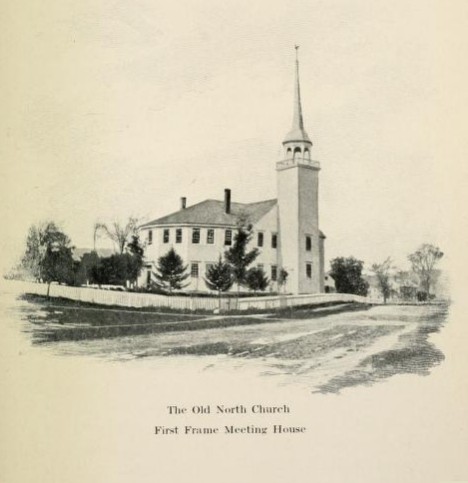
NH - first frame meeting house - The Old North Church
Concord City Hall 1910 (NH)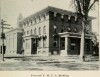
Concord
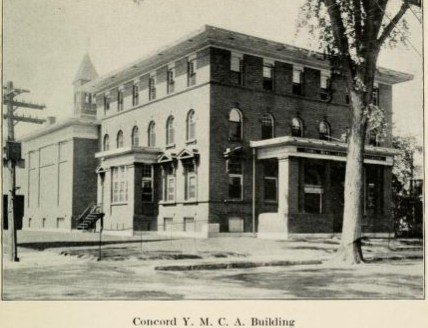
YMCA, Concord NH 1910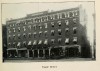
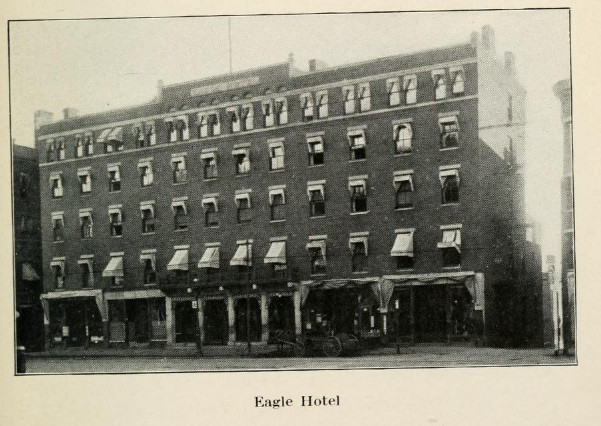
Eagle
Hotel, Concord NH 1910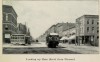
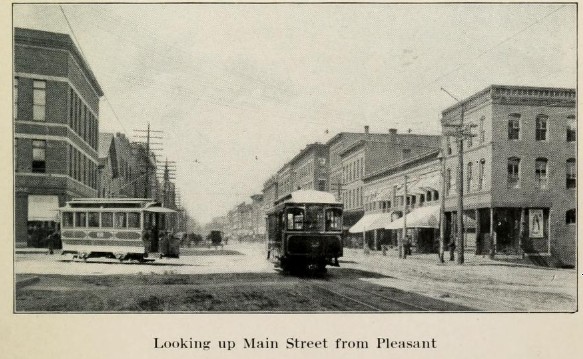
Looking Up Main Street from Pleasant Street,
Concord NH 1910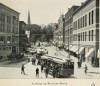
Looking up Pleasant Street, Concord NH 1910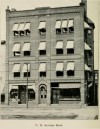
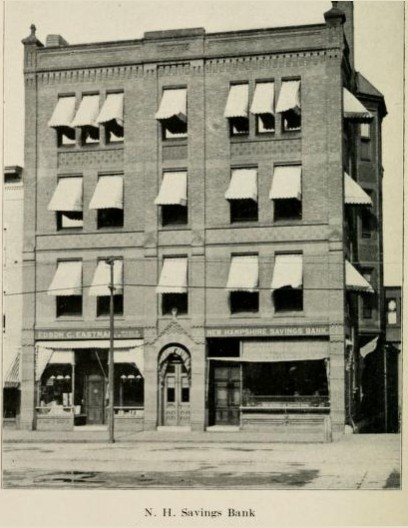
New Hampshire Savings Bank, Concord NH 1910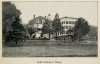
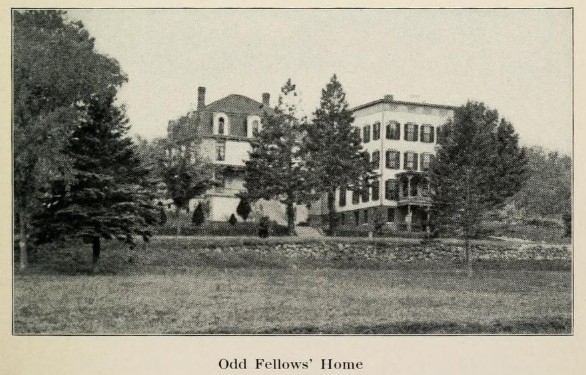
Oddfellows Home, Concord NH 1910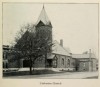
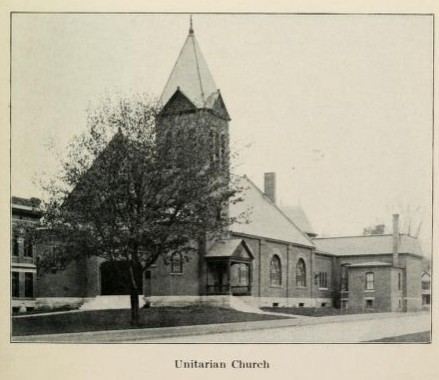
Unitarian Church, Concord NH 1910
- LOCAL
NEWS
- MAPS
DANBURY
- Brief
History of Danbury NH:: The town of Danbury was not
an original colonial grant, but was formed (and incorporated)
in 1795 from part of Alexandria to the north, and later
added land annexed from Wilmot and Hill. The name was taken
from Danbury, England, the site of an eleventh century Danish
camp. Danbury, Connecticut was also named for the site,
and a settler originally from there suggested the name.
Ragged Mt. Ski Area is located on its southern boundary.
- Villages
and Place Names: Elmwood, Fords Crossing, Fords Mill,
South Danbury, Converse Station
- GOVERNMENT
& RESEARCH:
- HISTORY
& GENEALOGY:
- History
& Genealogy: Danbury, N.H. - TXT file - coming
soon
- Online
Book: History
of Danbury NH, (section) from History of Merrimack
and Belknap counties, New Hampshire, 1889 - Hurd, Duane
Hamilton at Internet Archive (searchable) [notice the
chapter says DanSbury incorrectly.]
- Online
Books: Town Reports for Danbury NH,
including some vital statistics for the following years:
1895, 1925, 1927, 1935-1940, 1942-1951, 1953-1982, 1985-1986,
1989-2005, 2008
- Inn
at Danbury
- Story
of Ragged Mountain
- Cemetery:
small family plot in Danbury NH, photographs
- Cemetery:
Ward
Hill in Danbury NH
- PHOTOGRAPHS:
- MAPS
DUNBARTON
- Brief
History of Dunbarton NH: First granted in 1735 as Gorham's-town
to soldiers returning from the Canada Expedition, and regranted
in 1748 as Starkstown to Scots-Irish settlers led by Archibald
Stark. It was incorporated in 1765 as Dunbarton, named for
Dumbartonshire in Scotland, hometown to Archibald Stark.
Stark's son was General John Stark, patriot of Bunker Hill
and the Battle of Bennington, and his grandson Caleb was
a famous industrialist who established textile mills in
Manchester. Dunbarton has three town cemeteries: Center,
Pages Corner, and East; and one private cemetery: Stark.
Historical Points of Interest: Molly Stark House, Blacksmith's
House, Town Pound.
- Villages
and Place Names: Baileys Corner, Dunbarton Center,
Pages Corner
- GOVERNMENT
& RESEARCH:
- HISTORY
& GENEALOGY:
- History
& Genealogy: Dunbarton, N.H. -- TXT file - coming
soon
- Online
Book: History
of Dunbarnton NH, (section) from History of
Merrimack and Belknap counties, New Hampshire, 1889
- Hurd, Duane Hamilton at Internet Archive (searchable)
- Online
Books: Report of the selectmen, auditors and superintending
school committee of the Town of Dunbarton, (some
containing vital statistics, ie births marriages and
deaths) for the years ending: 1860, 1865, 1867, 1869-1875,
1879, 1881, 1888, 1894, 1896-1898, 1900 1903-1904, 1917,
1923-1926, 1929, 1934, 1936-1949, 1950-1963, 1967, 1987-1988,
1989-2000
- Online
Book: Record
of the centennial celebration of the incorporation of
the town of Dunbarton, N.H., on Wednesday, September
13, 1865 - Dunbarton, 1865
- Online
Book: History
of the Town of Dunbarton: Merrimack County, New Hampshire,
from the Grant by Mason's ... - Caleb Stark, 1860
- Sketch
of Dunbarton, New Hampshire - Mills, Ella, 1902
- Dunbarton
(History with Photographs) by WIlliam H. Stinson,
from The Granite State Monthly magazine, Vol XXXII,
April 1902, No. 4 at Hathi Trust
- Dunbarton
Center Cemetery - Find-A-Grave
- Stark
Cemetery, Dunbarton - Find-A-Grave
-
ONLINE BOOK: History
of the town of Dunbarton, Merrimack County, New-Hampshire
1 edition, By Caleb Stark - Internet Archive
- Biography
& Genealogy: "Dunbarton New Hampshire's Statistician,
Educator, Economist, U.S. Commissioner of Labor, Carroll
Davidson Wright, A.M., Ph.D., LL.D. (1840-1909)
- Blog: Cow Hampshire
- Descendants
of James Rogers of Dunbarton NH
- Online
Book: James Rogers of Londonderry and James Rogers of
Dunbarton (1897)
- PHOTOGRAPHS:
- MAPS
EPSOM
- Brief
History of Epsom NH: Incorporated 1727. One of seven
towns granted by the Governor of Massachusetts before New
Hampshire became an independent province. Epsom was named
for Epsom, England, home of the Earl of Derby, whose horse
racing 'derby' at Epsom Downs was famous. Epsom, England
was also known for its mineral springs, the source of Epsom
salts. New Hampshire's Epsom includes the village of Gossville.
- Villages
and Place Names: Epsom Circle, Gossville, New Rye,
Short Falls, Epsom Four Corners
- GOVERNMENT
& RESEARCH:
- HISTORY
& GENEALOGY:
- History
& Genealogy: Epsom, N.H. -- Txt File -- coming
soon
- History
of Epsom NH & Genealogy [A MUST SEE
web site includes genealogy, documents, census records,
town vital records, cemetery records and more by
Epsom Historical Assn/Epsom Early settlers]
- Online
Book: History
of Epsom NH, (section) from History of Merrimack
and Belknap counties, New Hampshire, 1889 - Hurd, Duane
Hamilton at Internet Archive (searchable)
- Online
Book: The Town register 1909: Epsom,
Canterbury, Loudon, Deerfield, Northwood, Chichester
- Mitchell-Cony Company, Inc
-
Annual
town report Town of Epsom, New Hampshire, including
vital records, for the following years: 1852, 1855,
1857-1858, 1865, 1884, 1889-1890, 1892-1894, 1896-1897,
1900, 1902-1903, 1925-1927, 1929, 1936-1962, 1965, 1967,
1969-1973, 1975, 1976, 1982, 1984, 1986-1993, 1995-2008
- History:
McClary Place, Epsom NH
- Epsom
Early History: Settlers, Old Buildings & More
- Brief
Early Look at Epsom NH
- Epsom
NH Cemetery Book Index
- The
Granite Monthly August 1925: The Oldest House in One
of the Holdest Towns--Home
of Gen Michael McLary at Epsom
- PHOTOGRAPHS:
- Epsom
Old Home Days 2006
- Epsom
NH Bible Church Endangered and moved
- Historic
Building: EPSOM,
Lamprey Blacksmith Shop, South side of Dover Road,
0.05 miles east of Gobor, Epsom, Merrimack County, NH
- American Memory/HABS
- Historic
Building: EPSOM,
Lamprey House, South side of Dover Road, 0.05 mile
east of Goboro, Epsom, Merrimack County, NH
- American Memory/HABS
- Historic
Building: EPSOM,
First Free Will Baptist Church, Parsonage, South
side of Dover Road, corner of Blackhall Road, Epsom,
Merrimack County, NH
- American Memory/HABS
- Pinterest
Photographs of Epsom NH
- Flickr
Photographs of Epsom NH
- Google
Photographs of Epsom NH
- MAPS
FRANKLIN
(city)
- Brief
History of the City of Franklin, NH: Incorporated
1828. Situated as the junction of the Pemigewasset and Winnipesaukee
Rivers, the town was originally known as Pemigewasset Village.
It was taken from portions of Salisbury, Andover, Sanbornton,
and Northfield. The name Franklin was adopted in 1820 in
honor of Benjamin Franklin, and the town was incorporated
as a city in 1895.
- Villages
and Place Names: Webster Lake, Webster Place, West
Franklin
- GOVERNMENT
& RESEARCH:
- HISTORY
& GENEALOGY:
- History
& Genealogy: Franklin, N.H. -- Txt file -- coming
soon
- Biography:
Frank Naismith Parsons
(1854 - 1934), b. Franklin NH
- Online
Book: History
of Franklin NH, (section) from History of Merrimack
and Belknap counties, New Hampshire, 1889 - Hurd, Duane
Hamilton at Internet Archive (searchable)
- Book:
Daniel
Webster. An address commemorating the birth of Daniel
Webster, at his birthplace at Franklin, N.H., August
28, 1913 (Volume 2) - McCall, Samuel W.
- Online
Books: Annual
report of Franklin, New Hampshire, including vital statistics
for the years: 1860-1861, 1863-1864, 1870-1880,
1883-1886, 1889-1897, 1899, 1900-1912, 1914-1922, 1924-1925,
1927-1941, 1943-1945,1948-1953, 1955-1956, 1960-1963,
1965--1973, 1976, 1978, 1980.
- "Famous"
People buried at Franklin (NH) Cemetery
- Find-A-Grave
- Cemetery
Inscriptions, Shaws Corner,
Franklin NH
- Cemetery
Inscriptions, Holy Cross Cemetery, Franklin NH
- Find-A-Grave
- Cemetery
Inscriptions: Webster Lake Cemetery, Franklin NH
- Find-A-Grave
- Franklin
NH - USgenWeb
- Online
Book: "Complete
business directory of Franklin, Concord, Suncook,
Hooksett, Manchester, Nashua, Lowell, Lawrence, Haverhill,
Merrimack, Amesbury and Salisbury, and Newburyport."
W.A. Greenough & Co., Boston, 1872-1873
- PHOTOGRAPHS:
- Flickr:
Photographs
of Franklin, Merrimack County NH
- Pinterest:
Photographs
of Franklin NH
- Google
Photographs: of Franklin NH
- City
of Franklin NH Photo Gallery (from official web
site)
- Indian
Head Resort, Franklin, NH -flickr
- Franklin
Falls Dam - flickr
- Historic
Building: FRANKLIN,
Calvin T. Call House, 49 Central Street, Franklin,
Merrimack County,
NH - American Memory/HABS
- Historic
Building: FRANKLIN,
A. Messer Building, 26 South Main Street, Franklin,
Merrimack County, NH
- American Memory/HABS
- Historic
Building: FRANKLIN,
Engine Company No. 1, Between 26 & 28 South
Main Street, Franklin, Merrimack County, NH
- American Memory/HABS
- Historic
Building: FRANKLIN,
Franklin Grocery Company Building, 1 South Main
Street, Franklin, Merrimack County, NH -
American Memory/HABS
- Historic
Building: FRANKLIN,
Horace Webster House, 39 Central Street, Franklin,
Merrimack County, NH
- American Memory/HABS
- Historic
Building: FRANKLIN,
William Thompson House, 45 Central Street, Franklin,
Merrimack County, NH -
American Memory/HABS
- Bird's
Eye View of Franklin NH - 1884,
from American Memory
- PLACES
OF INTEREST
- MAPS
HENNIKER
- Brief
History of Henniker NH: First known as Number 6, part
of a line of settlements running between the Merrimack and
Connecticut Rivers, and the area was settled by families
from Marlborough, Massachusetts, naming it New Marlborough.
In 1752 the land was granted to Andrew Todd, who named it
Todd's-town. In 1768, Henniker was named for Sir John Henniker,
a London merchant who had shipping interests in Boston and
Portsmouth prior to the revolution, giving it the distinction
of being the only place named Henniker on earth.
- Villages
and Place Names: Colby, Henniker Junction, West Henniker,
Emerson Station
- GOVERNMENT
& RESEARCH:
- HISTORY
& GENEALOGY:
- History
& Genealogy: Henniker, N.H. -- TXT -- coming
soon
- Online
Book: History
of Henniker NH, (section) from History of Merrimack
and Belknap counties, New Hampshire, 1889 - Hurd, Duane
Hamilton at Internet Archive (searchable)
- History
of the Town of Henniker NH
- online book, FREE (Google Books)
- Online
Book: History
of the Town of Henniker, Merrimack County, New Hampshire:
From the Date of the Canada ... - Leander Winslow Cogswell,
1889
- Online
Books: Annual report Town of Henniker, New Hampshire,
including vital statistics, for the years: 1930, 1935-1968,
1970-2005.
- Ocean
Born Mary of Henniker NH
- PHOTOGRAPHS:
- Flickr
Photographs: Henniker NH
- Pinterest
Photographs
of Henniker NH
- Google
Photographs: Henniker
NH
- Tucker
Free Library Photo Gallery - flickr
- 1889
Bird's Eye View of Henniker NH -
American Memory
- Henniker
NH Bridge - flickr
- Henniker
NH and River - flickr
- Looking
through the Bridge
- flickr
- Craney
Pond in Henniker NH - flickr
- Historic
Building: HENNIKER,
House, South side of Route 9, West Henniker, Merrimack
County, NH - American Memory/HABS
- Historic
Building: HENNIKER,
Wilcoxen House, Route 9, West Henniker, Merrimack
County, NH - American
Memory/HABS
- Historic
Building - HENNIKER,
Ocean-Born-Mary House, Route 202 vicinty, Henniker,
Merrimack County, NH -
American Memory/HABS
- Historic
Structure - HENNIKER,
Edna Dean Proctor Bridge, Spanning Contoacook River
at State Route 114, Henniker, Merrimack County, NH
- American Memory/HABS
- Henniker:
James
Willis Patterson (1823-1893) - born Henniker NH;
graduated from Dartmouth College (1848) and returned
there as a professor of mathematics, astronomy and meteorology
(1854-65). He served in the New Hampshire state house
of representatives in 1862 and again in 1877-78. Patterson
served as a Republican U.S. congressman from New Hampshire
(1863-67) and as a U.S. senator (1867-73).
- MAPS
HILL
- Brief
History of Hill, New Hampshire: Incorporated 1778. First
granted in 1753 to a group of settlers from Chester, New
Hampshire, the town was known as New Chester. In 1837, the
town was renamed in honor of Isaac Hill, a Democrat who
served as governor, and as senator in President James Buchanan's
administration. In 1941, the entire village of Hill was
moved to higher ground to allow the original land to be
used for a Merrimack River flood control project.
- Villages
and Place Names: Hill Center, Murray Hill, South
Alexandria, New Chester
- GOVERNMENT
& RESEARCH:
- HISTORY
& GENEALOGY:
- History
& Genealogy: Hill, N.H. - TXT File (this
site) Includes geographical description,
names of some original grantees, text of some early
documents including names of the signers; Residents
Paying Polls 1775; brief description early settlers
and prominent residents including Carr Huse, W.W. Sargent,
Gilman Kimball, Joseph Huse, Charles M. Winchester,
Gilman Currier, Augustus B. Johnson, W.W. Currier, George
W. Sumner, James Glines, David Shaw, and others;church
history; early manufacturers; description of cemeteries;
brief civic history; list of participants in the Civil
War; Biographic Sketch of Frank R. Woodward. Original
Source, History of Merrimack and Belknap Counties,
New Hampshire; Philadelphia: J.W. Lewis & Co., 1885
- Online
Book: History
of Hill NH, (section) from History of Merrimack
and Belknap counties, New Hampshire, 1889 - Hurd, Duane
Hamilton at Internet Archive (searchable)
- Is
Hill NH a Ghost town?
- Cemetery
Find-A-Grave: Bunker
Hill Cemetery, Hill NH
- Cemetery
Find-A-Grave:Graveyard
behind Hill Center Church, Hill NH
- Cemetery
Inscriptions: Thompson-Hilliard
Cemetery, Hill NH
- PHOTOGRAPHS:
- MAPS:
HOOKSETT
- Brief
History of Hooksett NH: Incorporated 1822; First known
as Chester Woods and Rowe's Corner, this town was called
Hooksett for nearly fifty years before being incorporated.
The name may have come from a hook-shaped island in the
Merrimack or from early fishermen, who called the area Hookline
Falls. Rocky ledges flank the Merrimack River, and there
were several cross-river ferries located here, as well as
lumber mills and a brick-making establishment powered by
the falls. In 1794, the lottery-funded Hooksett Canal became
part of the transportation facilities of the Amoskeag cotton
mills in Manchester.
- Villages
and Place Names: Martin, Martins Corner, Rowes Corner,
South Hooksett, Martins Ferry
- GOVERNMENT
& RESEARCH:
- HISTORY
& GENEALOGY:
- History
& Genealogy: Hooksett, N.H. -- TXT file -- coming
soon
- Online
Book: History
of Hooksett NH, (section) from History of Merrimack
and Belknap counties, New Hampshire, 1889 - Hurd, Duane
Hamilton at Internet Archive (searchable)
- Online
Books:
Annual report Town of Hooksett, New Hampshire, with
vital statistics for assorted years between 1915-2010
- Brief:
Hooksett Town History
(from official web site)
- Martin's
Cemetery inscriptions
- Find-A-Grave
- Head
Cemetery Inscriptions
- Find-A-Grave
- "Complete
business directory of Franklin, Concord, Suncook, Hooksett,
Manchester, Nashua, Lowell, Lawrence, Haverhill, Merrimack,
Amesbury and Salisbury, and Newburyport." W.A.
Greenough & Co., Boston, 1872-1873
- PHOTOGRAPHS:
- NEWS:
- MAPS
HOPKINTON
- Brief
History of Hopkinton NH: Incorporated 1765. First granted
in 1735 as New Hampshire Number 5 to settlers from Hopkinton,
Massachusetts, who renamed the town New Hopkinton. Setting
the pattern for future towns, settlers were required to
build homes, fence in their acreage, plant it with English
grass, and provide a home for a minister, all within seven
years. Contoocook village, a substantial portion of the
town, was named for a tribe of Penacook Indians who once
lived there, as was the Contoocook River which flows through
the town.
- Villages
and Place Names: Contoocook, Hatfield Corner, Tyler,
West Hopkinton, Barton's Corner, Drew Lake, Blackwater District,
Gould Hill District
- GOVERNMENT
& RESEARCH:
- HISTORY
& GENEALOGY:
- History
& Genealogy: Hopkinton, N.H. -- TXT file -- coming
soon
- Online
Book: History
of Hopkinton NH, (section) from History of Merrimack
and Belknap counties, New Hampshire, 1889 - Hurd, Duane
Hamilton at Internet Archive (searchable)
- Online
Book: Life
and times in Hopkinton, N.H - Lord, Charles Chase;
pt. 1. Descriptive and historical.-pt. 2. Personal and
biographical.-pt.3. Statistical and documentary; 1890
- The
Granite Monthly, May 1901:
The Baptist Church in Hopkinton.
- Hopkinton
NH Cemeteries - BURIALS, alphabetical (PDF)
- Online
Book: The
town register: Henniker, Bradford, Warner and Hopkinton,
1908
- Online
Books: Annual
report Town of Hopkinton, New Hampshire, including
vital records for assorted years between 1926-2006
- Online
Book: Sketch
of Capt. Paul Rolfe George of Hopkinton, N.H - George,
John H., 1885
- Online
Book: Report
of the Trial of Abraham Prescott, for the murder of
Mrs. Sally Cochran of Pembroke, June 23, 1833 :
executed at Hopkinton, January 6, 1836 (1869)
- Online
Book: Abraham
Kimball: (1892) *NOTE: See END of the book for Hopkinton
History
- Online
Book: The
Lookout and other poems (1891) See END of the book
for connections of the poems to Hopkinton NH History
- Biography--Hopkinton
New Hampshire Explorer, Engineer & Surveyor, Stephen
Harriman Long (1784-1864) -- Blog, Cow Hampshire
- Contoocook
Watershed
- MUSEUMS
& INTERESTING PLACES
- New
Hampshire Antiquarian Society
[now
the Hopkinton Historical Society]
300
Main Street
Hopkinton, NH 03229
(603) 746-3825
- PHOTOGRAPHS
& MULTI-MEDIA:
- Multiple
photographs (several artists)
- Hopkinton NH - flickr
- Pinterest
Photographs
of Hopkinton NH
- Railroad
Bridge, Hopkinton NH
- Rowell's
Bridge, Hopkinton NH
- Hopkinton
NH town hall
- Contoocook
Academy, 1856
- Photographs
of Hopkinton NH (from official town web site)
- Historic
Building (Drawings): HOPKINTON,
Boulder Farm, Dunbarton Road, Hopkinton, Merrimack
County, NH - American Memory/HABS
- Historic
Building: HOPKINTON,
St. Andrew's Church (Episcopal), Hopkinton Village,
Hopkinton, Merrimack County, NH-
American Memory/HABS
- Historic
Structure: HOPKINTON,
Railroad Bridge, Spanning Contoocook River, Hopkinton
vicinity, Merrimack County, NH
- American Memory/HABS
- Video:
Up the Road - Hopkinton,
including Contoocook, New Hampshire
- MAPS
LOUDON
- Brief
History of Loudon NH: Chartered by Governor John Wentworth
in 1773, Loudon was originally a part of Canterbury. It
was named in honor of John Campbell, fourth Earl of Loudoun,
a Scottish soldier and aide-de-camp to the king during the
Seven Years' War. Under Lord Loudoun's orders Major Robert
Rogers organized the famous Roger's Rangers frontier fighters.
One of Lord Loudoun's aides, John Loudoun McAdam, is known
for developing the "macadamizing" process of road
surfacing. Loudon is home to the New Hampshire International
Speedway.
- Villages
and Place Names: Loudon
Center, Loudon Ridge, Pearls Corner, Sabattus Heights
- GOVERNMENT
& RESEARCH:
- Loudon
NH Official Web Site
Town
Clerk
Mailing Address: PO Box 7837
Loudon, NH 03307
Street Address: 29 S. Village Road
Phone: 603-798-4542
- Local
State Goverment, Profile & Statistics - Loudon NH
- Loudon
Municipal and State Government
- Maxfield
Public Library
Contact: Nancy Hendy, Library Director
Mailing Address: 8 Rt. 129
Loudon, NH 03307
Street Address: 8 Rt. 129
Phone: 603-798-5153
- Loudon
NH Historical Society
PO Box 7837
Loudon NH 03307
Contact: Richard Malfait, President
603-783-4741
- HISTORY
& GENEALOGY:
- History
& Genealogy: Loudon, N.H. --TXT file --
coming
soon
- Online
Book: History
of Loudon NH, (section) from History of Merrimack
and Belknap counties, New Hampshire, 1889 - Hurd, Duane
Hamilton at Internet Archive (searchable)
- Online
Book: The Town register 1909: Epsom, Canterbury,
Loudon,
Deerfield, Northwood, Chichester - Mitchell-Cony Company,
Inc
- Marriages
- performed in Loudon NH by Rev. Jedediah Tucker 1790-1815
- TXT file (this site)
- Tax
List 1774 of Loudon NH - TXT file (this site)
- Online
Books: Annual
Report of the Town of Loudon, New Hampshire, for
the years: 1993, 1995-1998, 2001
- Biographies
of Loudon Individuals and genealogies of Families
of the following: Joseph Batchelder, Stephen Batchelder
Family, Philip Brown, Richard Brown Family, Elisha Buswell,
Carr Family, The Cate Family, Shadrach Mellen Cate,
Nathaniel Clark, Abner Clough, Rev. Jeremiah Clough,
Dimond Family, Samuel B. Lovering, Moses Lovering, Nathaniel
Martin, John Moore Family, Samuel Moore, Stephen Moore,
Moses Morse, Ordway Family, Osgood Family, Moses Rowell,
Thomas Sargent, Stevens Family, William Tenney, Tilton
Family, Deacon Stephen Weeks, Wood family (this site)
-TXT file
- NH
Historic Marker, Shaker Village
- MUSEUMS
AND INTERESTING PLACES:
- PHOTOGRAPHS:
- MAPS
NEW LONDON
- Brief
History of New London NH: First granted in 1753 as Heidelberg,
in honor of George II's visit to his German possessions
at the time. The town was granted again in 1773 as Alexandria
Addition, but the name didn't last. It was incorporated
as New Londonderry, shortened to New London, in 1779. New
London is home to Colby-Sawyer College, and includes the
village of Elkins on Pleasant Lake.
- Villages
and Place Names: Crockett Corner, Elkins, Hastings,
Lakeside, Otterville, Pages Corner
- GOVERNMENT
& RESEARCH:
- HISTORY
& GENEALOGY:
- History
& Genealogy: New London, N.H. -- TXT file -- coming
soon
- Online
Book: History
of New London NH, (section) from History of
Merrimack and Belknap counties, New Hampshire, 1889
- Hurd, Duane Hamilton at Internet Archive (searchable)
- Online
Book: A
History of the Town of New London, Merrimack County,
New Hampshire, 1779-1899 ... - Edward Oliver Lord,
1899
- Mirror
to America; a history of New London, New Hampshire,
1900-1950. ... Squires, J. Duane
- VIDEO:
Tour
of old New London NH
- PHOTOGRAPHS:
- MAPS
NEWBURY
- Brief
History of Newbury NH: Situated at the south end of
Lake Sunapee, this town has gone through numerous name changes.
It started in 1753 as Dantzic, after the Baltic seaport.
The first provincial grant in 1754 named the town Hereford,
in honor of Edward Devereaux, Viscount Hereford. Governor
John Wentworth renewed the grant in 1772 under the name
Fishersfield, for his brother-in-law John Fisher. The town
finally incorporated as Newbury in 1837, as suggested by
settlers originally from Newbury, Massachusetts. Newbury
is home to Mount Sunapee, portions of Lake Sunapee, and
the village of Blodgett's Landing.
- Villages
and Place Names: Blodgetts Landing, Edgemont, Mount
Sunapee, Pine Cliff, South Newbury, Box Corner
- GOVERNMENT
& RESEARCH:
- MUSEUMS
& PLACES OF INTEREST
- HISTORY
& GENEALOGY:
- History
& Genealogy: Newbury, N.H.-- TXT file --
coming
soon
- Online
Book: History
of Newbury NH, (section) from History of Merrimack
and Belknap counties, New Hampshire, 1889 - Hurd, Duane
Hamilton at Internet Archive (searchable)
- Online
Books: Annual
report of the Town of Newbury, New Hampshire, for
the years: 1961, 1966-1967, 1990-1993, 1997, 2000, 2001-2004,
2006, 2009-2010
- PHOTOGRAPHS:
- MAPS
NORTHFIELD
- Brief
History of Northfield NH: Incorporated 1780. One of
the first towns created following the Revolution, Northfield
was granted in 1780 from part of Canterbury. The town organized
one of the first local libraries, called the "Northfield
Improving Society for the Promotion of Useful Knowledge,"
the same title used in 1743 by Benjamin Franklin for the
American Philosophical Society in Philadelphia. The library
was chartered by the state in 1718, operating with a membership
fee of $5 annually, and continued in existence under the
original name until 1842.
- Villages
and Place Names: East W
- GOVERNMENT
& RESEARCH:
- HISTORY
& GENEALOGY:
- History
& Genealogy: Northfield, N.H. --TXT file -- coming
soon
- Online
Book: History
of Northfield NH, (section) from History of Merrimack
and Belknap counties, New Hampshire, 1889 - Hurd, Duane
Hamilton at Internet Archive (searchable)
- Online
Book: History of Northfield, New Hampshire 1780-1905.
In two parts with many biographical sketches and portraits
also pictures of public buildings and private residences
(1905) - BOOK
1 | Book 2
- Online
Book:
Bygones. Some things not generally known in the history
of Northfield, New Hampshire - Cross, Lucy Rogers
Hill, Mrs., 1900
- Online
Books: Annual
report of the Town of Northfield, New Hampshire
for the years: 1942, 1946-1947, 1948-1949, 1952-1967,
1990-1991, 1993-1997-1998-2003, 2007-2011
- The
Granite Monthly, January 1901: Bygones--Some
Things Not Generally Known in the History of Northfield
- Online
Book: Mob,
under pretence of law ; or, The arrest and trial of
Rev. George Storrs at Northfield, N.H., with the
circumstances connected with that affair and remarks
thereon - Storrs, George, The arrest was made during
an anti-slavery meeting, 1835
- Online
Book:
A sermon, preached at Northfield, on the day of public
thanksgiving: November 29, 1804 (1804)
- Article:
The
Colby and Phelps Families of Bow and Northfield, New
Hampshire - blog:Cow Hampshire
- PHOTOGRAPHS:
- MAPS
PEMBROKE
- Brief
History of Pembroke NH: Incorporated 1759. First granted
in 1728, the town was known as Lovewell's Town, in honor
of Captain John Lovewell, who built the stockade fort at
Ossipee. Shortly afterward, the town took the name Suncook,
the Indian name of the river flowing through the area. When
the town was incorporated in 1759, it was given the name
Pembroke in honor of Henry Herbert, ninth Earl of Pembroke
in southern Wales.
- Villages
and Place Names: North Pembroke, Suncook
- GOVERNMENT
& RESEARCH:
- HISTORY
& GENEALOGY:
- Online
Book: History
of Pembroke NH, (section) from History of Merrimack
and Belknap counties, New Hampshire, 1889 - Hurd, Duane
Hamilton at Internet Archive (searchable)
- History
of Pembroke, N.H.
- by Rev N.F. Carter, Volume I - online book, free,
searchable
- History
of Pembroke, N.H.
-
by Rev N.F. Carter, Volume II, Genealogical - online
books
- Online
Book: Report
of the trial of Abraham Prescott, on an indictment
for the murder of Mrs. Sally Cochran, before the Court
of common pleas, holden at Concord, in the county of
Merrimack, on the first Tuesday of September, A.D. 1834
- Prescott, Abraham, defendant [Abraham Prescott was
from Pembroke NH]
- Genealogy
& Biography: The
Face of Addie G. (Whittemore) Tallant of Pembroke New
Hampshire (1850-1875) - blog, Cow Hampshire
- Pembroke
NH Historic Marker, First Church/Meeting House
- Tombstone
Inscriptions (some) - Old
North Pembroke Cemetery
North Pembroke - Internment.net
- Tombstone
Inscriptions (some) - Buck
Street Cemetery, Pembroke NH - Find-A-Grave
- Freeman
Tilden in Pembroke,
from Granite State Monthly 1925
- PHOTOGRAPHS:
- MAPS
PITTSFIELD
- Brief
History of Pittsfield NH: For many years prior to its
1782 incorporation, this town was an unnamed parish of Chichester.
Like Pittsburg in the north, Pittsfield was named for William
Pitt, Prime Minister of England, and a great friend of the
Colonies prior to the American Revolution. The town was
settled by several families originally from Hampton.
- Villages
and Place Names: Rings Corner, Websters Mill, South
Pittsfield
- GOVERNMENT
& RESEARCH:
- HISTORY
& GENEALOGY:
- History
& Genealogy: Pittsfield, N.H. --TXT file -- coming
soon
- Online
Book: History
of Pittsfield NH, (section) from History of
Merrimack and Belknap counties, New Hampshire, 1889
- Hurd, Duane Hamilton at Internet Archive (searchable)
- History
of Pittsfield, New Hampshire / E. Harold Young.
Young, E. Harold, 1953 [history to Civil War years].
- Pittsfield
Old Home Week 1919
-- includes welcoming home of World War I veterans,
WWI Plaque speeches and events (Hathitrust and Granite
State Monthly)
- Pittsfield
Old Home Week 1922--150th Year Celebration of Pittsfield
NH (HathiTrust, Granite State Monthly magazine)
- Online
Books: Annual
Report of the Town of Pittsfield, various reports
within the time frame of 1937-2010
- Baptist
Cemetery, Pittsfield NH -
Findagrave
- Berry
Cemetery, Pittsfield NH
- Findagrave
- OTHER
CEMETERIES
in MERRIMACK CO. NH
- Baptisms
at Our Lady of Lourdes parish (Catholic), Pittsfield
NH (assorted) from 1870s to 1990s.
- PHOTOGRAPHS:
- OLD
NEWS
- MAPS
SALISBURY
- Brief
History of Salisbury NH: First granted in 1736, before
New Hampshire was a separate colony, the town was named
Baker's Town, in honor of Captain Thomas Baker, a famous
Indian scout. Following establishment of New Hampshire,
Governor Benning Wentworth regranted it as Stevenstown.
It was also held the names Gerrishtown and New Salisbury,
incorporating as Salisbury in 1768 after Salisbury, Massachusetts.
Salisbury is the birthplace of Daniel Webster.
- Villages
and Place Names: Salisbury Heights, Scribners Corner,
Smiths Corner, Thompson Corner, West Salisbury
- GOVERNMENT
& RESEARCH:
- HISTORY
& GENEALOGY:
- History
& Genealogy: Salisbury, N.H. --TXT file -- coming
soon
- Online
Book: History
of Salisbury NH, (section) from History of Merrimack
and Belknap counties, New Hampshire, 1889 - Hurd, Duane
Hamilton at Internet Archive (searchable)
- Salisbury
NH (old) Records online
- Library
- Online
Book: The
history of Salisbury, New Hampshire : from date of settlement
to the present time - Dearborn, John J. 1890
- Online
Book: The
story of a private soldier in the revolution - Foster,
John, 1852- Narrative of the experiences of Moses
Fellows, of Salisbury, N.H
- Online
Book:
The descendants of Samuel Colcord Bartlett and Eleanor
Pettengill : his wife, of Salisbury, New Hampshire,
to November 1, 1915 - Bartlett, Edwin Julius,
- Salisbury
NH USGenWeb
- some vital records, census, list of cemeteries, etc.
- Online
Books: Town
of Salisbury, New Hampshire annual report - for
various years between 1875-2008
- PHOTOGRAPHS:
- MAPS
SUNCOOK
Suncook
is a census-designated place (CDP) in Merrimack County, New
Hampshire, United States. The population was 5,379 at the
2010 census Approximately 2/3 of Suncook village is located
in the town of Pembroke, with the remainder in Allenstown.
[SEE ALLENSTOWN or PEMBROKE for History, etc.]
Resources for Suncook NH:
"Complete
business directory of Franklin, Concord, Suncook, Hooksett,
Manchester, Nashua, Lowell, Lawrence, Haverhill, Merrimack,
Amesbury and Salisbury, and Newburyport." W.A. Greenough
& Co., Boston, 1872-1873
Sanborn
Insurance Maps of Suncook NH for years: 1906, 1912, and
1923
SUTTON
- Brief
History of Sutton NH: First settled in 1748, the land
had been granted to Obadiah Perry and others from Haverhill,
Massachusetts, and named Perrystown. Because it was located
in Indian country near Mount Kearsarge, many settlers forfeited
their claims. The land was regranted in 1784 to settlers
from Sutton, Massachusetts. Sutton was at one time home
to a religious sect known as the Osgoodites.
- Villages
and Place Names: East Sutton, North Sutton, Shingle
Mill Corner, South Sutton, Sutton Mills
- GOVERNMENT
& RESEARCH:
- HISTORY
& GENEALOGY:
- History
& Genealogy: Sutton, N.H. --TXT file -- coming
soon
- Online
Book: History
of Sutton NH, (section) from History of Merrimack
and Belknap counties, New Hampshire, 1889 - Hurd, Duane
Hamilton at Internet Archive (searchable)
- Online
Book: The
history of Sutton, New Hampshire : consisting of the historical
collections of Erastus Wadleigh, Esq., and A. H. Worthen
(Volume 1) - Worthen, Augusta H.
- Online
Book: The
history of Sutton, New Hampshire : consisting of the historical
collections of Erastus Wadleigh, Esq., and A. H. Worthen
(Volume 2)
- Online
Book: The Granite Monthly, May 1925: New Hampshire Towns:
History
of Old Houses in Sutton North Village
- Online
book: Three dedications : Soldier's
Monument at South Sutton, Pillsbury Free Library at
Warner, Margaret Pillsbury General Hospital at Concord,
1891
- Online
Books: Annual
report of the Town of Sutton, New Hampshire, for assorted
years between 1965-2003
- Sutton
NH, USGenWeb page
(maps, a few biographies, outdated)
- The
Dresser Family of Sutton NH
(personal
web site)
- MUSEUMS
AND INTERESTING PLACES:
- PHOTOGRAPHS:
- MAPS
WARNER
- Brief
History of Warner NH: First granted as Number 1 in 1735,
this town was named New Amesbury, Jennesstown, Waterloo,
and Ryetown before it was incorporated as Warner in 1774.
It was named for a leading citizen and relative of Governor
John Wentworth, Jonathan Warner. It was one of the last
towns established under English province rule prior to the
American Revolution. Warner includes the village of Davisville.
- Villages
and Place Names: Bagley, Davisville, Dimond, Lower
Village, Melvin Mills, New Amesbury, Number One, Roby, Waterloo
- GOVERNMENT
& RESEARCH:
- HISTORY
& GENEALOGY:
- History
& Genealogy: Warner, N.H. --TXT file -- coming
soon
- Online
Book: History
of Warner NH, (section) from History of Merrimack
and Belknap counties, New Hampshire, 1889 - Hurd, Duane
Hamilton at Internet Archive (searchable)
- Online
Book: The
history of Warner, New Hampshire, for one hundred and
forty-four years, from 1735 to 1879 - Harriman,
Walter; 1879
- History
of Warner NH - from official town web site
- The
history of Warner NH (part of Warner's "Master
Plan")- PDF
- Online
Book,
Granite State Monthly, "Township No. 1" (early
history of Warner NH.
- Online
Books: Annual
report of the Town of Warner, New Hampshire for
various years between: 1938-2008
- Online
book: Three dedications : Soldier's
Monument at South Sutton, Pillsbury Free Library
at Warner, Margaret Pillsbury General Hospital at Concord,
1891
- Online
Book: Historical
discourse delivered at the centennial celebration of
the Congregational church in Warner, N. H. - Huntington,
Henry S; 1872
- Bio:
Warner
New Hampshire Author, Amanda Bartlett Harris (1824-1917)
- from blog: Cow Hampshire
- Bio:
Warner
New Hampshire’s Pearl Habor Casualty: Ensign Edward
Blanchard Cloues, USN (1917-1941) - from Blog: Cow
Hampshire
- Tombstone
Inscriptions (some) Coal
Hearth Cemetery, Warner NH - Internment.net
- PHOTOGRAPHS:
- Photo
Tour of Warner NH - from Warner Historical Society
- Photographs
of Warner NH on Flickr
- Pinterest
Photographs of Warner NH
- Photograph:
Nehemiah
George Ordway (1828-1907) b. Warner NH; governor
of Dakota Territory 1880-1884. The highlight of his
administration was the tremendous growth in the territory's
population, which doubled between 1879 and 1884. Ordway
was indicted on corruption charges in 1883. He underwent
a criminal trial in 1884 and was removed from office
by President Arthur.
- Warner:
Photograph - Nehemiah
George Ordway (1828-1907) — also known as Nehemiah
G. Ordway, b in Warner, Merrimack County, N.H., November
10, 1828. Republican. New Hampshire Republican state
chair, 1860; member of New Hampshire state house of
representatives from Warner, 1875-77; member of New
Hampshire state senate 9th District, 1879-80; Governor
of Dakota Territory, 1880-84. Indicted on corruption
charges in 1883; his criminal trial in 1884 was cut
short by a jurisdiction ruling; removed from office
by President Arthur. Died July 1, 1907. Interment at
Pine Grove Cemetery, Warner, N.H.
- MAPS
WEBSTER
- Brief
History of Webster NH: Originally a part of Boscawen,
this town was named for Daniel Webster, famous American
lawyer and statesman. Webster served as Secretary of State
during the administrations of Presidents Harrison, Tyler,
and Fillmore. Mount Webster and Webster Lake were also named
for him.
- Villages
and Place Names: Dingit Corner, Gerrish Corner, Snyders
Hill, Swetts Mills, Courser Hill
- GOVERNMENT
& RESEARCH:
- HISTORY
& GENEALOGY:
- PHOTOGRAPHS:
- MAPS
WILMOT
- Brief
History of Wilmot NH: Originally a part of New London,
Wilmot was carved out of the gore of Mount Kearsarge and
incorporated in 1807. It was named in honor of Dr. James
Wilmot, a scholar and clergyman, and rector at Barton-on-Heath
in Warwickshire, England. Dr. Wilmot had joined with William
Pitt, the Marquis of Rockingham, and others in protesting
the treatment of the American colonies by the British crown.
- Villages
and Place Names: North Wilmot, Wilmot Flat
- GOVERNMENT
& RESEARCH:
- HISTORY
& GENEALOGY:
- History
& Genealogy: Wilmot, N.H. --TXT file --
See
history of New London NH for earliest history. Incorporation
of the town, early description, first town officers,
Kearsage Mountain, and some participants in the Civil
War, 1810 U.S. Census of Kearsarge Gore and New London
NH.
- Online
Book: History
of Wilmot NH, (section) from History of Merrimack
and Belknap counties, New Hampshire, 1889 - Hurd, Duane
Hamilton at Internet Archive (searchable)
- Biography
of Donald Hall, former poet laureate of New
Hampshire; in June 2006 appointed the Library of Congress's
fourteenth Poet Laureate Consultant in Poetry. Resides
in Wilmot NH.
- Tombstones
can be found at Find-A-Grave
- PHOTOGRAPHS:
- MAPS
|
|
|
| |
|
| |
|
| |
|
| |
|
| |
|
|